- Digital Transformation
- Strategy
Digital Transformation in 2026: A Strategic Roadmap for Business Leaders
Digital transformation is no longer optional — it's a competitive necessity. Learn how to build a practical roadmap that modernizes operations, enhances customer experiences, and positions your organization for sustainable growth.
The State of Digital Transformation in 2026
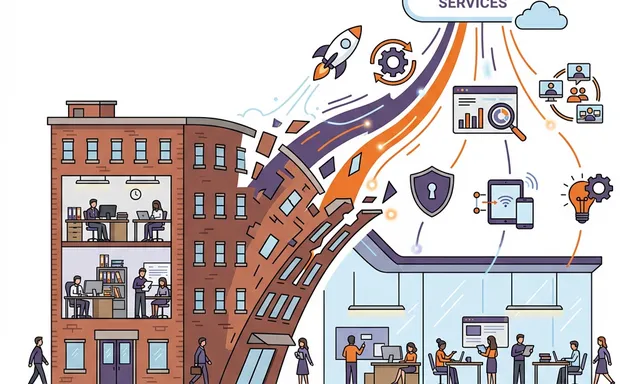
Digital transformation has moved far beyond simply “going digital.” In 2026, it represents a fundamental rethinking of how organizations create value — from internal operations and customer experiences to business models and revenue streams.
Yet the statistics remain sobering: 70% of digital transformation initiatives fail to reach their goals, according to McKinsey research. The primary reasons aren’t technical — they’re strategic. Organizations invest in technology without a clear vision, skip change management, or try to transform everything at once.
At NETLINKS Inc., we’ve guided 500+ organizations through successful transformations. Here’s the strategic roadmap that works.
What Digital Transformation Actually Means
Digital transformation is not about buying software. It’s about reimagining four interconnected dimensions of your business:
1. Operations & Processes
Digitizing manual workflows, automating repetitive tasks, and creating data-driven operations that are faster, cheaper, and more reliable. This is where most organizations start — and where the quickest wins live.
2. Customer Experience
Building seamless digital experiences across every touchpoint — website, mobile app, customer service, and post-sale support. Modern customers expect Amazon-level convenience from every vendor.
3. Data & Analytics
Transforming raw data into strategic insights with modern analytics platforms, real-time dashboards, and AI-powered decision support. The goal: move from reactive to predictive.
4. Workforce Enablement
Equipping your team with modern tools — collaboration platforms, digital workspaces, and continuous learning programs that keep skills current.
Building Your Transformation Roadmap
Step 1: Assess Your Digital Maturity
Before you can plan where you’re going, you need to understand where you are. A digital maturity assessment evaluates:
- Technology infrastructure — how modern and integrated are your current systems?
- Process automation — what percentage of workflows are manual vs. automated?
- Data capabilities — can you access real-time insights, or are you relying on monthly reports?
- Digital culture — is your team comfortable with technology adoption and change?
Step 2: Define Your North Star
What does success look like in 3 years? Be specific:
- “Reduce order-to-delivery time from 14 days to 3 days”
- “Achieve 360-degree customer visibility across all touchpoints”
- “Automate 80% of financial reconciliation processes”
- “Enable real-time decision-making with live operational dashboards”
Step 3: Sequence for Impact
Not everything can — or should — happen at once. Sequence initiatives across three horizons:
Horizon 1 (0–6 months): Quick Wins
- Implement cloud-based ERP for core operations
- Automate top 5 most time-consuming manual processes
- Deploy basic analytics dashboards
Horizon 2 (6–18 months): Capability Building
- Integrate all business systems into unified data platform
- Launch customer self-service portals
- Implement AI-powered forecasting
Horizon 3 (18–36 months): Transformation
- Deploy intelligent automation across the organization
- Enable predictive operations and maintenance
- Build data-driven innovation capabilities
Step 4: Invest in Change Management
Technology implementations fail when people resist change. Effective change management includes:
- Executive sponsorship visible at every level
- Communication plans that explain the “why” behind changes
- Training programs tailored to different roles and skill levels
- Feedback loops that let employees shape the transformation
- Quick wins that demonstrate value early and build momentum
Technology Stack for 2026
The modern digital transformation stack includes:
| Layer | Technology | Purpose |
|---|---|---|
| Foundation | Cloud ERP (Odoo) | Unified business operations |
| Integration | API Layer | Connecting systems and data |
| Intelligence | AI/ML Platform | Predictive insights and automation |
| Experience | Web/Mobile Apps | Customer and employee interfaces |
| Analytics | BI Dashboard | Real-time decision support |
Measuring Transformation ROI
Track these metrics to demonstrate value:
- Operational efficiency — process cycle time reduction
- Revenue impact — new digital revenue streams
- Customer satisfaction — NPS score improvement
- Employee productivity — output per employee increase
- Cost reduction — operational cost savings
Common Pitfalls to Avoid
- Technology-first thinking — start with business problems, not shiny tools
- Boiling the ocean — trying to transform everything simultaneously
- Ignoring culture — the biggest barrier to transformation is always people
- Underinvesting in data — you can’t be data-driven without clean, accessible data
- Treating it as a project — transformation is an ongoing journey, not a one-time initiative
The NETLINKS Difference
Unlike pure consultancies that hand off a strategy deck and walk away, NETLINKS Inc. combines strategic thinking with deep technical execution. We build and implement the ERP systems, custom applications, AI tools, and cloud infrastructure that power your transformation.
Our 400+ technology experts have delivered transformations across manufacturing, retail, professional services, public sector, and nonprofit organizations worldwide.
Stay Informed with Expert Insights
Discover the latest trends in ERP, AI, and digital transformation from our certified technology experts.
100+



Resources to boost
your growth